The New York Times Magazine
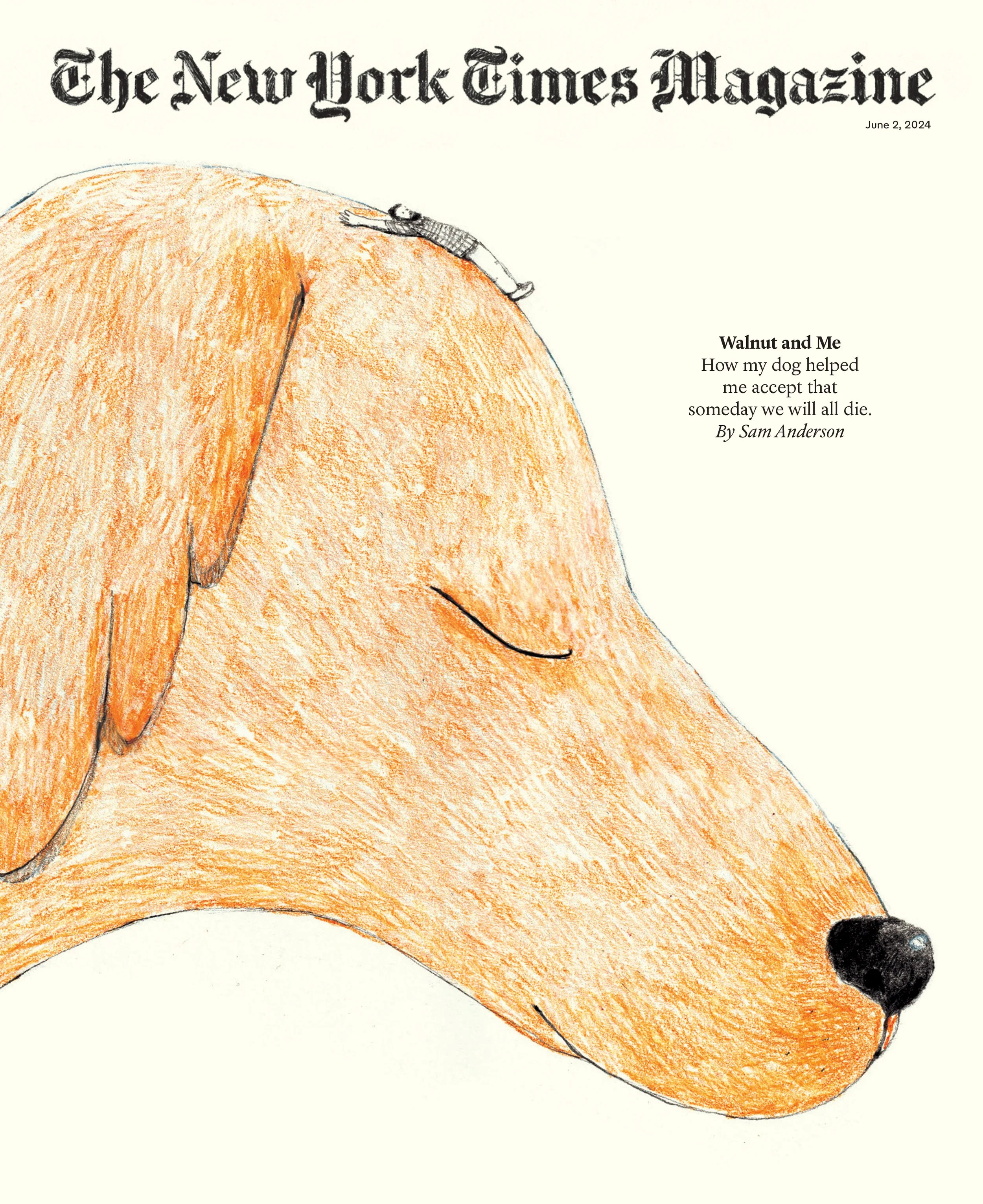
Walnut and me
Editorial
Cover, printed illustrations and interactive animations on paper for “Walnut and me” by Sam Anderson, for The New York Times Magazine.
Winner of Best of Discipline, black cube for Illustration at the 104th ADC awards, Best Illustrated Story at the ASME awards.
The New Yorker
Can AI Keep a parent alive?
An interactive piece that follows my father, in the process of creating a death bot (an AI powered replica of a loved one, meant to replace them after they die), and myself, as I interact with it - interweaving our two perspectives.
This marks my very first interaction with AI in general.
I personally don’t use it in any way - however I also cannot ignore its existence, especially as a visual artist: being one means also being vigilant to what is going on outside of myself. And so, I became particularly interested in the intimate aspects of allowing AI in our daily, private lives. We are used to talk about it in terms of work and economic shift, efficiency, but less so in terms of companionship, surrogacy, communication. There is currently a growing number of companies that offer subscription - based products such as an alternative, virtual version of yourself or of a loved one. This branch of AI development is called Grief tech, or, if not exclusive to after-death use only, individual AI. The mere concept of it brings forth huge ethical conundrums (e.g. capitalization, consent, governance, data use: many death bots are being created after a loved one dies, without their knowledge) as well as powerful gut reactions, whether it is disdain or, in some cases, relief.
When I was a kid, my father in particular shielded me from developing a natural concept of death by reading to me classic fairytales with revised endings or, as weird as it sounds, Dante’s Divine Comedy - where death doesn’t really exist, but you just end up in a structured afterlife architecture, where your consciousness and body just keep going, same as before.
So to me, talking about death was definitely not normalized - this accompanied me in my adulthood. Later, I found this to be true for many other people, too, my father included.
For all the aforementioned reasons, my father and I could be potential targets for these kind of companies and products - that push towards normalizing digital death versus normalizing death. Despite the skepticism, there might be a part of us compelled to try this in the future, while still acutely aware of the fact that our grief is being capitalized upon.
So why would anyone even consider doing that? Because fear and helplessness in the face of death are ancient. And AI is some powerful tool we think we can control.
So we told a story, with the help of Sam Wolson from The New Yorker, now that I am an adult and my father is growing old and displays signs of more severe health challenges. My father created a digital replica of himself, his legacy, and I interacted with it, for three months.
Turned out, the stories were two and of very different genres: mine was a cautionary tale, my father’s was a memoir. We explored the different generational outlook towards AI, we had our emotions scrambled, I could experience what toll this journey took on me and what promises it offers to my father - with the aim of raising more questions than giving answers: how does the emotional landscape of a person shift, if something designed, by third parties, to please us and bind us, steps in - to stir us away from the big ancient collective feelings and rituals: loss, grief, aging - and ultimately how are we going to remember our relationships with those we lost, how do we find closure. How do we move on?
Told with two different POVs, the intertwining stories are visually treated with hand drawn animations hand drawn on paper by me (for my story) and 3D visuals by Sam Wolson (for my father’s)
The New York Times - Culture
5 minutes that will make you love musicals (column)
The New Yorker - Pigeon Toes by Ian Frazier
The New York Times Opinion - AI should keep your secrets